
There are three stages of HIV and the symptoms throughout each stage can be different. Some people won’t have the same symptoms, as the symptoms can vary from person-to-person and the degree of severity can differ too. Stage one is acute infection, stage two is clinical latency and stage three is symptomatic infection. Most people infected with HIV these days will not reach stage three, because of antiretroviral medication that is available.
Stage 1: Acute Infection (Primary Infection)
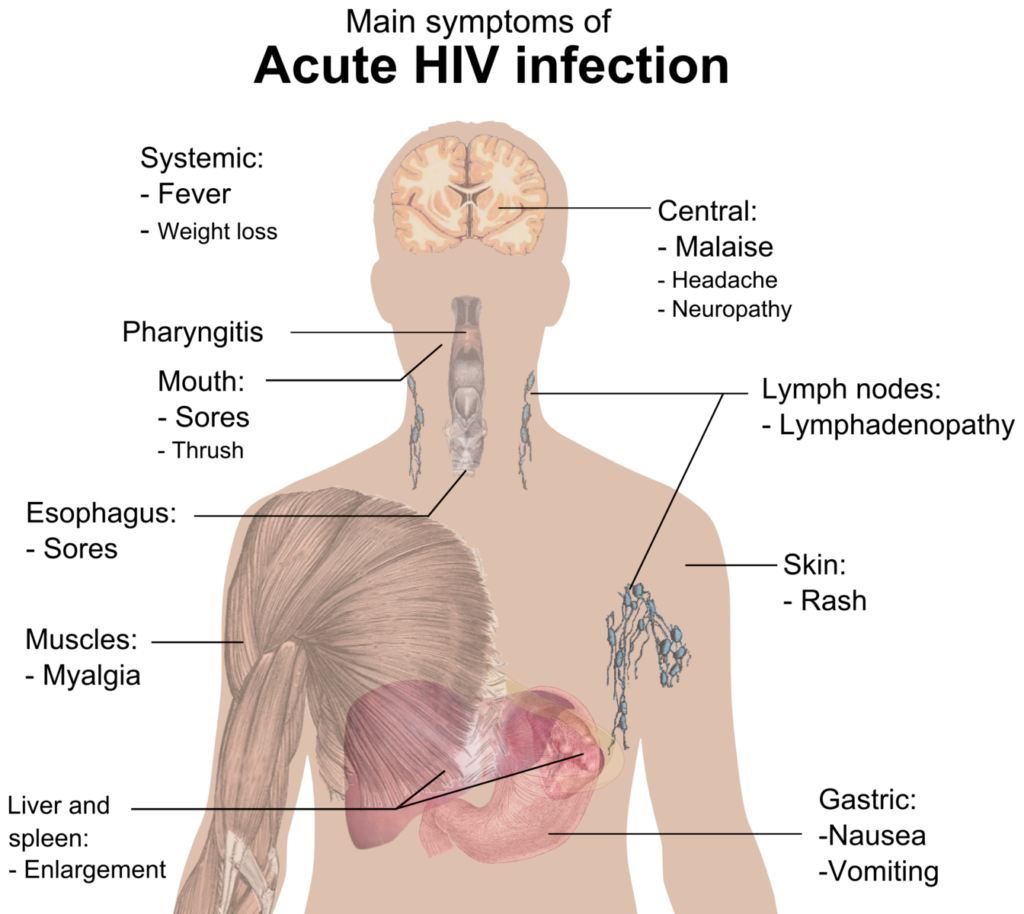
The first stage is called acute infection, which can also be referred to as the primary infection and this stage can last for several weeks. Approximately 50% to 90% percent of those infected will develop an influenza like illness called acute HIV infection, which some refer to as the “fuck flu”. Symptoms can usually last for a few days or several weeks, but some people do not have any symptoms at all. A person is much more infectious during this period, as their viral load is very high, because their body has not yet developed a strong immune defence to reduce the number of viral particles in the blood stream. Some of the symptoms can include:
- Chills
- Diarrhoea
- Fatigue
- Fever
- Headache
- Malaise
- Mouth ulcers
- Muscle aches
- Nausea
- Night sweats
- Rash
- Sore throat
- Swollen lymph nodes
- Vomiting
- Weight loss
It’s important to remember that some of these symptoms can be similar to other illnesses, which is why the only way to know for sure whether you have been infected is to get tested. Getting tested on a regular basis is the best way to know your status and getting tested doesn’t always require you to visit a doctor or laboratory, as there are home HIV testing kits you can buy from drug stores or pharmacies to test for HIV in the comfort of your own home. Home HIV testing kits can provide results within fifteen to twenty minutes from the time you take the test, but these test kits do have some limitations by not detecting HIV as early as laboratory tests can.
Stage 2: Clinical Latency (Asymptomatic Stage)
The second stage is called clinical latency, which can also be referred to as the asymptomatic stage or chronic HIV infection and can last from several weeks to over ten years without treatment. The length of time an HIV infected person will remain in this stage without treatment varies based on a number of factors, so there is no specific time frame. At this point, the body is creating a strong immune defence to reduce the number of viral particles in the bloodstream, which is when newly infected people start beginning to feel better. HIV is active within the lymph nodes, which can often cause lymph nodes to become swollen, in response to large amounts of the virus becoming trapped in what’s called the follicular dendritic cells (FDC) network. The surrounding tissues that are rich in CD4 cells may also become infected, with viral particles accumulating in infected cells and as free virus. During this stage the virus multiplies (or replicates) by creating new copies of itself, but at this point this happens at low levels.
Stage 3: Symptomatic HIV Infection
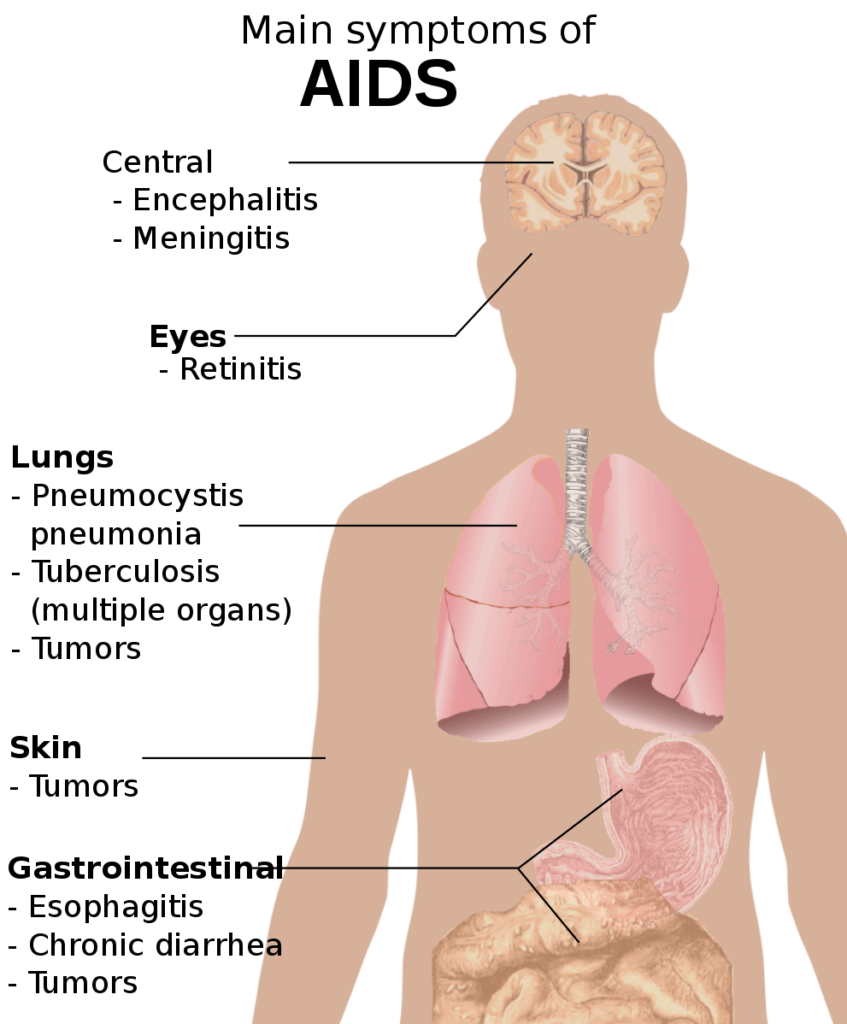
The third stage is called symptomatic HIV infection and is the final stage of HIV infection, defined by the low CD4 count. This is the stage where people become very sick, as the body is no longer able to fight off opportunistic infections, because the body’s immune system has become badly damaged. People who reach this stage can also develop various cancers, such as Kaposi’s sarcoma and cancers of the immune system known as lymphomas. There are also other symptoms including:
- Blotches on or under the skin or inside the mouth, nose or eyelids (red, brown, pink or purple in colour)
- Chills
- Diarrhoea that lasts for more than a week
- Extreme tiredness
- Fever
- Memory loss, depression and other neurological disorders
- Persistent cough
- Pneumonia
- Profuse night sweats
- Rapid weight loss
- Sores of the mouth, anus or genitals
- Swollen lymph glands in the armpits, groin or neck
Some of these symptoms can be related to other illnesses, so it’s important to remember this and getting yourself tested for HIV is the way to confirm your HIV status. Home HIV testing kits are a great way to identity HIV if you are concerned about privacy or worried about dealing with healthcare professionals, although home HIV testing kits do have limitations, such as the their inability to identity HIV at the early infection stage, plus they can only detect HIV and not provide any additional information such as viral load or CD4 count. Most people will not reach the third stage of HIV these days if they are taking antiretroviral medication that suppresses the virus, although some people might find that the virus does not respond to treatment if they have a drug-resistant strain.
People will experience different symptoms or severity and during the first two stages, but some people may not experience any symptoms at all, although they can still transmit the virus. The virus is highly infectious during the first stage compared with the second stage, as the body has not developed a strong immune defence in the first stage to reduce the number of viral particles in the bloodstream, which means there is a higher chance of transmitting the virus compared to the second stage. The symptoms during the first stage are caused by the body reacting to the virus, as the virus is circulating throughout the body’s blood stream and the body’s immune system tries to attack the virus by producing HIV antibodies in a process called seroconversion.
Further Reading:
- Symptoms of HIV – https://www.hiv.gov/hiv-basics/overview/about-hiv-and-aids/symptoms-of-hiv
- Symptoms and Stages of HIV Infection – https://www.avert.org/about-hiv-aids/symptoms-stages
Featured Photo: GustavoAckles from Pixabay.
Article ID: CC008
Version Control: 1.0 – September 27, 2021: Original article published.