

The U.S. Centers For Disease Control (CDC) published an article in their Morbidity and Mortality Weekly Report (MMWR) on June 5, 1981 marking the first official reporting of what would later become known as Acquired Immunodeficiency Syndrome (AIDS). Two people had already died of AIDS at the time this report was released and since then an estimated 42.3 million people have died across the globe from AIDS-related illnesses according to UNAIDS. In 2023, an estimated 630,000 died from AIDS-related illnesses worldwide, meaning someone died as a result of the virus every minute.
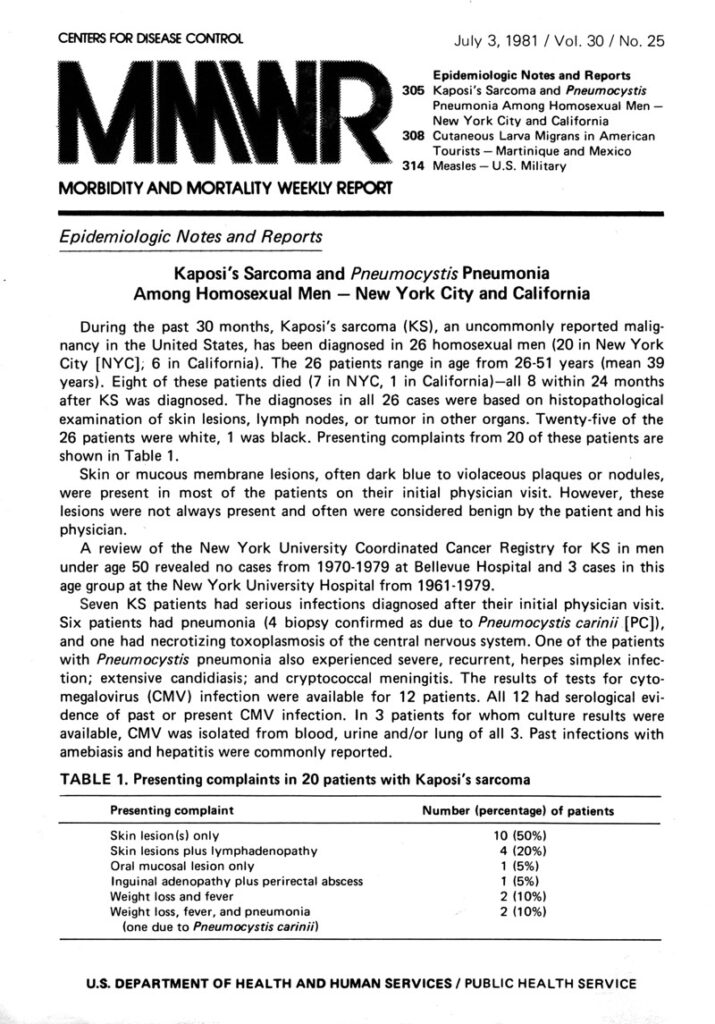
The term AIDS is used less frequently these days, perhaps because less people are dying from AIDS or because antiretroviral therapy (ART) is preventing many deaths caused by AIDS, but AIDS still exists. There has been a recent shift from the term AIDS to “advanced HIV” or “HIV Stage 3”, which is taking the focus away from AIDS and putting more emphasis on HIV. A possible reason could be to reduce the stigma that can be associated with HIV/AIDS or because the term AIDS can be triggering for some.

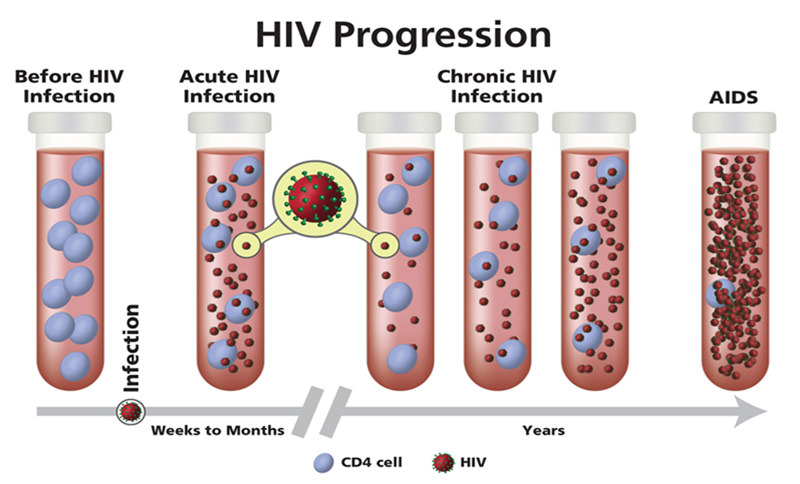
An AIDS diagnosis refers to the final stage of Human Immunodeficiency Virus (HIV) and once a person has been diagnosed with AIDS, they will forever be known to have AIDS, even if their CD4 count increases and their viral load reduces as a result of antiretroviral therapy (ART). AIDS is diagnosed when a persons CD4 count drops below 200 cells per cubic millimeter (mm3) of blood or when opportunistic infections or specific cancers, such as Kaposi’s sarcoma or certain types of pneumonia take advantage of the weaker immune system. In comparison, a person with a healthy immune system has a CD4 count between 500 and 1,600 cells per cubic millimeter (mm3).

HIV is a virus that attacks the immune system, where it specifically targets the CD4 cells, which are also called T-helper cells; a type of white blood cell that helps the body fight off infections. The virus uses CD4 cells to replicate and become stronger, which destroys the CD4 cells so the body can no longer defend itself against infections. If left untreated, the virus will reduce the number of CD4 cells in the body, which makes the body more susceptible to opportunistic infections caused by bacteria, viruses, fungi or protozoa.

HIV can be acquired through contact with bodily fluids that contain the virus and the only bodily fluids that can transmit HIV are blood, breast milk, pre-seminal fluid, rectal fluids, semen and vaginal fluids. HIV is transmitted when these fluids enter the bloodstream of another person, which could be through an injection or coming into contact with a mucous membrane or damaged tissue during sexual intercourse. Mucous membranes are present inside the mouth, penis, rectum and vagina.

Due to a higher concentration of virus in the blood and semen when a person is infected, HIV is more easily transmittable during the first stage. The virus reproduces during the second stage at much lower rates, so transmission is reduced, because there is less virus in the blood and semen. According to a UK study from 2008, a CD4 count can drop to 200 without ART in 1 to 2 years for 1 in 4 people (25%), who are known as fast progressors, in 2 to 10 years for 2 in 4 people (50%) and in 10 to 15 years for 1 in 4 people (25%). Less than 1% of people would still have a high CD4 count after 15 years and these people are known as long term slow progressors, or elite controllers.

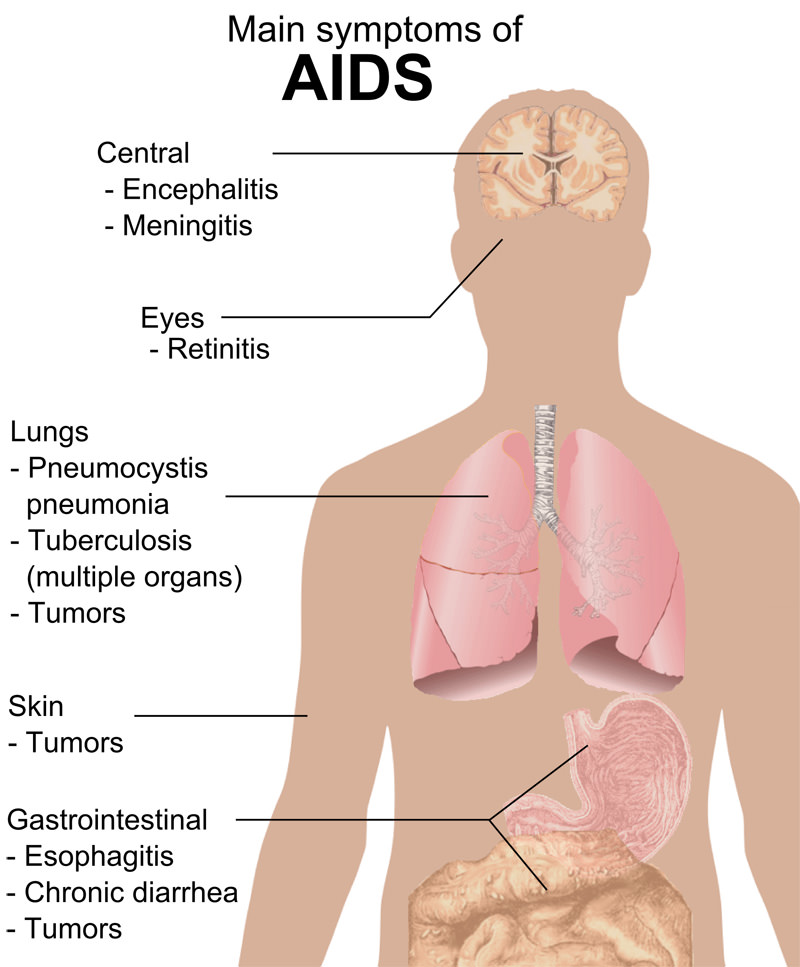
Main Symptoms of AIDS

The symptoms of AIDS can vary for each person, but here is a list of common symptoms:
  • fever
  • fatigue
  • skin rash
  • muscle aches and joint pains
  • headache
  • sore throat
  • nausea
  • vomiting
  • oral, genital or anal ulcers
  • weight loss
  • night sweats
  • persistent cough
  • enlarged lymph nodes in the neck, armpits and groin

Complications of AIDS

The complications of AIDS can vary from person to person, but here are some of the complications:
  • Tuberculosis
  • Cytomegalovirus
  • Candidiasis
  • Cryptococcal meningitis
  • Toxoplasmosis
  • Cryptosporidiosis
  • Wasting syndrome
  • Neurological complications
  • Kidney diseases
  • Memory impairment
  • Kaposi’s sarcoma
  • Lymphomas

Staying as Healthy as Possible with AIDS

For those living with AIDS who don’t have access to antiretroviral therapy (ART) or who have deliberately chosen to forgo using ART to experience the effects of AIDS, there are some things you can do and some precautions you can take, including:

  • Asking your doctor about vaccinations so you can get vaccinated if you have AIDS
  • Avoiding alcohol, tobacco and recreational drugs
  • Taking medicines prescribed by your doctor to avoid any kind of AIDS-related complications
  • Taking extra precautions when working or visiting hospitals or any other health care facilities so you do not contract any infections
  • Avoiding raw or undercooked products and unpasteurized dairy products
  • Washing your hands frequently when preparing foods
  • Eating a balanced and nutritious diet, with a focus on fruits, vegetables, whole grains, lean proteins and healthy fats
  • Drinking filtered water
  • Maintaining regular physical activity to strengthen the immune system, reduce fat and maintain a healthy weight
  • Having supports in place to take care of your mental health to help manage anxiety, depression of stress related issues due to living with HIV/AIDS
Millions of people have died from AIDS-related illnesses since 1981, so it’s important for us to never forget those who passed away from AIDS and some of us even knew people personally. By diluting the term AIDS, we risk forgetting those who passed away from AIDS related illnesses, but we should never let the memories of those we knew and loved be forgotten. The same goes for the people we never knew, they also deserve to be remembered, especially when some of these people were abandoned when their AIDS diagnosis became known and they were left to die alone.

Some bug chasers are chasing HIV, but aren’t wanting the virus to progress any further than the first (acute) stage or second (chronic) stage of the virus, but a growing number of bug chasers are becoming more comfortable with letting the virus progress to a more advanced state so they can experience AIDS. This is a personal choice, which is the same as everything we do in life, as we control our own destinies and we need to be responsible for the decisions we make. We shouldn’t judge anyone for the decisions they make, whether this is to not chase the bug, to chase the bug or to experience the virus in various stages.

Those who are seeking to reach the third and final stage of HIV and become diagnosed with AIDS may be willing to experience the effects of having AIDS, then might decide to take antiretroviral therapy (ART) to manage the virus to bring the virus back to a manageable level, but some will choose to let the virus take them to the end of their existence. Some people based on their own personal reasons are comfortable with dying as a result of AIDS. The reasons for bug chasing can be personal, but if you are wanting to experience AIDS or if you have a question for someone who is, please leave a comment below so we can have a conversation about this.

References and Further Reading:


Featured Photo: Gerd Altmann from Pixabay.
Infographic: Courtesy of National Institutes of Health
Article ID: CC083
Version Control: 1.0 โ€“ April 21, 2025: Original article published.

Subscribe
Notify of
guest

19 Comments
Newest
Oldest
Inline Feedbacks
View all comments
PozBear
Admin
November 9, 2025 3:00 pm

Some of the thinking us HIV Poz folk warm to the notion we will advance to AIDS is that some of us are going to. While there is great success managing HIV; not all are well managed and treatment failure happens to some of us all the time.

For some, the cure proves to be worse than the disease. We’re left trying to influence the least bad end to our lives.

PozBear
Admin
November 9, 2025 2:56 pm

A note. In the article Jason notes metric is when CD4 drops below 200 cubic millimeters of blood. In fact it is 200 ml or milliliters of blood.

Lexxx
Member
November 9, 2025 1:32 pm

It’s so nice to see someone who respects our choices! I personally am an AIDS chaser. I fully intend to have AIDS to the end. I see it as an honor to carry HIV and would never want to suppress it. I’m officially Poz and I’m not gonna lie, there’s a big part of me that hopes I’m a Rapid progressor.

PozBear
Admin
November 9, 2025 2:51 pm
Reply to  Lexxx

As slow progressors are few and far between , relax. In the rare chance that you are, there really isn’t anything you can do about it. So it doesn’t make sense to fret. As far as how quickly HIV sets up shop and get’s its factories running efficiently, mostly that happens in 6 – 8 weeks. Every so often a new convert experiences viral loads in the millions per ml. Hundreds of thousands are common. Tens of thousands at diagnosis; Not at all uncommon. 2% or so will be slow progressors whose initial viral load might be a couple thousand which drops to a couple hundred in the first month. No matter, none of us has any control over this.

Fuck flu is experienced by half or so of people newly converted. There doesn’t appear to be a direct relationship between severity of seroconversion symptoms and viral load.

Lexxx
Member
November 9, 2025 5:52 pm
Reply to  PozBear

Completely Understandable! I appreciate the reply!

Scott
Guest
Scott
July 8, 2025 10:23 pm

Thank you for this article, I thoroughly enjoyed it. The expert choice of phrasing in the final paragraphs might well be the first time Iโ€™ve recognised someone else articulating my own curiosity about AIDS progression.

If one truly believes the virus is a gift (as I do), I think flirtation with the latter stages of HIV/AIDS is almost inevitable. If the virus represents a gift to be nurtured during acute and chronic stages, the exact same virus cannot suddenly become a contagion in need of containment during the final stage.

As the virus flourishes, it will inevitably place more and more strain on our bodies. To some, that strain may be wholly undesirable and warrant immediate medication. For others (myself included), seeing how our bodies react and adapt triggers intense curiosity and a desire to experience more of what our virus has to offer.

Perhaps Iโ€™m being immature, but part of me would like to experience AIDS for no other reason than โ€˜earningโ€™ the right to use that word to describe myself. If my overall health remains in check, I see no reason to halt exploration of the new chapter my virus has afforded me.

I am lucky to count several HIV+ men in my friendship circle, some proving instrumental in my development as a chaser. I would relish any opportunity to pay these men back, in this case by sharing first hand knowledge on the realities of allowing your HIV to develop into AIDS.

It can be uncomfortable to acknowledge the very real consequences that come with this lifestyle. In that respect, I welcome the fact our community seems to be showing more interest (or less fear) in exploring a life with AIDS.

I would love to read more AIDS-focussed articles in the future. Such an important topic that deserves far greater attention.

PozBear
Admin
July 9, 2025 9:55 am
Reply to  Scott

Man you pretty much nailed our purpose here Scott. None of us advocate a view approaching “everyone should get HIV, much less AIDS”. But some of us find this particular virus interesting enough that we seek direct personal experience with it.

PozBear
Admin
July 9, 2025 10:52 am
Reply to  Scott

Jason, who founded this site, does an excellent job researching articles and putting them together. And from a front end POV, we want visitors to get information about HIV.

Steve
Member
April 28, 2025 2:27 pm

A well-crafted article on a life changing topic that has affected everyone one way or another. Most of us in the group knew someone who perished to this virus, some are following their doctors advise and others are on the edge.
I attend a Sunday dinner with a group of PLWH (8 to 10) who view their world with uncertainty due to action in the White house. I choice to remain positive in life at this moment in time. With the power of positive attitude we can survive and flourish in darken days.

PozBear
Admin
April 26, 2025 3:48 pm

I speak with a large group of PLWH (people living with HIV) daily and by and large none are looking to progress to Stage3 HIV (AIDS). While I admire Carsten’s passion for HIV and AIDS, and he is not alone. However the number of infected people who embrace fully experiencing HIV, mostly unchecked, to their end, is a very small percentage of the total.

Most I know are vigilant about lab work and tend to adhere with medication. It is in fact a small fraction of PLWH who have any desire to progress to AIDS. Some, sadly, are overly concerned though. HIV is quite manageable although med failures are not uncommon and I know at least one who is on “last ditch” meds to control their HIV. It isn’t a happy event for them.

From then to now? It’s quite a different experience. Many of us know people who were infected at the beginning of the AIDS crisis; and who are still alive (albeit a touch more curmudgeonly perhaps).

The beginning was very similar to the start of COVID. Death was common as we began to figure out what the hell was happening. Unlike COVID, we hadn’t yet decoded the human genome, nor understood how immune systems work. We’ve come a long way.

I have other PLWH friends who live daily in fear of their disease. I try to encourage them to accept that they have limited control save to gain information and listen to medical professionals for whom they’ve developed trust. And of course time will reveal whether that was well placed trust or misplaced trust.

Carsten
Member
April 23, 2025 10:11 am

Dear Jason: you have done it again – this is as Tom writes a very comprehensive and impressive and role-model article: its a topic that we are becoming more and more attracted to and feeling more and more natural about – and a topic that is challenging: how can we feel sooo DEEPLY attracted to achieve AIDS! hard question to ask but this is who we are – what I want : so grateful for this site and for you! hugs Carsten

Cyber
Member
April 27, 2025 11:56 am
Reply to  Jason

Yes, absolutely agree that this is a good article for information and discernment within our personal lives per our relationship or future relationship with HIV and AIDS.

Tom
Member
Tom
April 21, 2025 10:18 pm

A great and comprehensive without judgment article. As one of those who is seeking not only hiv but AIDS it helps to clarify exactly what I am thinking and feeling. You are so right that it is a personal choice and I am still exploring what the reasons behind my choice are and what I shall do once I reach my goal of AIDS. I think I know but am still debating.

Carsten
Member
April 23, 2025 10:12 am
Reply to  Jason

Thanks for being so upfront about your own wish for helping yourself via this article – I truly know I feel much more at ease

Carsten
Member
April 26, 2025 12:02 pm
Reply to  Jason

exactly: you see this so right Jason, to want to learn more about AIDS is paramount – and to welcome and support this desire is indeed so meaningful – and on a personal level as well – thanks for admitting how you too are here

Scott
Guest
Scott
July 8, 2025 11:05 pm
Reply to  Carsten

Completely agree guys!

If we speak openly about our shared desires to develop AIDS, it might counteract how reluctant many guys feel about engaging with this topic in public.

There is absolutely no shame in admitting you have privately explored the more uncomfortable realities of a chaserโ€™s lifestyle. As the article states, some men will ultimately decide they are comfortable dying from AIDS and that is ok.

Educating our community is vital to ensure everyone arrives at the decision that is right for them.

I am still figuring out my own path and, in the spirit of openness, admit to regularly pondering the question: โ€œdo I want to die from AIDS?โ€. To help counter anyone feeling ashamed, I am also willing to admit that sometimes my answer is โ€˜noโ€™ and sometimes it is โ€˜yesโ€™.

Always remember: there is no right or wrong way to experience HIV/AIDS. Every decision is valid, made between one man and his virus.